
AI search is not the death of SEO
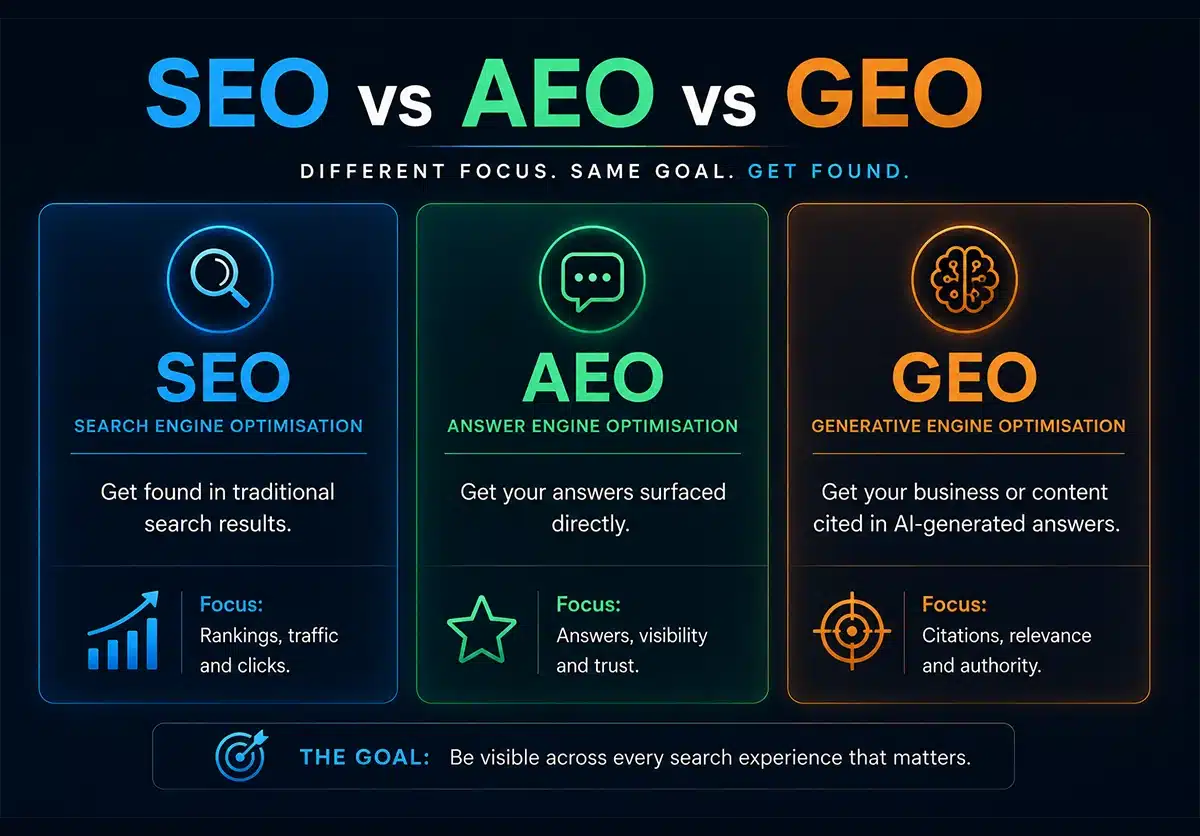
AI search is not the death of SEO. Google’s own guidance makes that clear. The real change is that weak content, poor page experience, and messy technical foundations have less room to hide.
For business owners, the message is simple. AI search is not a reason to stop investing in SEO. It is a reason to fix the content, structure and website issues that already hold back visibility, trust and enquiries.
Google is not telling businesses to chase a new trick. It is saying the same foundations still matter, but they now need to hold up under a more complex version of Search.
Google is not replacing SEO with something new
Google’s article makes one thing clear. AI search still sits inside Google Search.
That matters because the goal has not changed.
Google still wants to help people find original, useful content that adds value. It still needs to crawl pages. It still needs to understand what is on the page. It still needs to decide whether that content helps the person searching.
So this is not a shift away from SEO.
It is a shift away from weak SEO.
If your content only exists because someone told you to “do blogs for SEO”, this is where the problem starts. A page that repeats the same general advice as every competitor is not a strong asset. A blog that targets a keyword but avoids the real question is not doing enough.
That kind of content was already weak.
AI search just makes the weakness easier to expose.
AI search changes how people ask questions
Google says people are asking longer and more specific questions in AI Overviews and AI Mode.
They are also asking follow-up questions.
That changes the standard for business content.
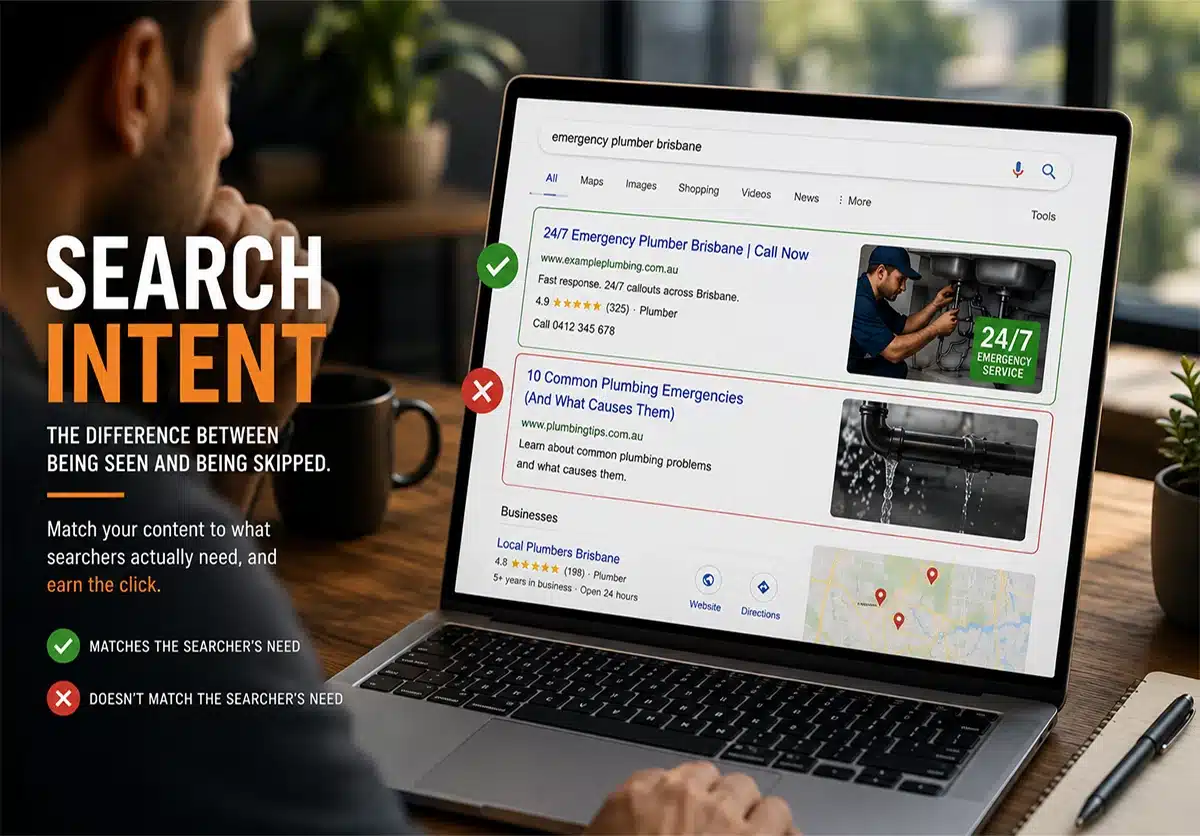
A basic service page that says what you do is not always enough. A short blog that gives a surface-level answer is not enough either. Content needs to explain the issue properly. It needs to answer the next question before the user has to ask it.
This does not mean every page needs to be long.
It means every page needs to be useful.
For a business website, that may mean explaining:
- what the problem is
- why it matters
- what causes it
- what the customer should understand before taking action
- how the business solves it
That is still SEO. It is just SEO built around real user intent, not keyword stuffing.
Helpful content is still the centre of Search
Google says content should be unique, valuable, and made for people.
That is the strongest message in the article.
It does not say to write for AI. It does not say to optimise for large language models. It does not say to create content for bots first.
It says to focus on the visitor.
This is important for small and medium businesses. Many businesses still publish content because they think they “need blogs for SEO”. But content that does not help a real customer has limited value.
Helpful content should give the reader something they did not already know.
That might be a clearer explanation. It might be a more specific answer. It might be a local business insight. It might be a practical breakdown of a problem your customers keep facing.
The point is simple.
If the content could sit on any competitor’s website, it is probably not strong enough.
Page experience affects whether content performs
Google also says good content can fail if the page experience is poor.
This is where SEO and website design meet.
A useful article can still disappoint users if the page is slow, cluttered, hard to read, or difficult to navigate. If visitors cannot find the main information quickly, the content is not doing its job.
This matters for AI search because Google is still sending users to websites.
When those users arrive, the page needs to support the visit.
That means the page should load properly. It should display well on mobile. It should make the main content easy to find. It should avoid burying important information under pop-ups, confusing menus, or messy layouts.
A business can have good information and still lose enquiries because the page experience gets in the way.
That is why custom website design matters as part of SEO. A better website does not just look better. It helps users understand, trust, and act.
Google still needs to access your content
The technical side has not gone away.
Google says pages still need to meet its technical requirements. That means Google must be able to find, crawl, index, and consider the content.
This is a basic point, but it is often where business websites fail.
A page may look fine to a user, but still have problems behind the scenes. Googlebot may be blocked. Important content may not be indexable. The page may return an error. The site may have technical issues that stop Google from processing it properly.
AI search does not remove that problem.
It makes technical SEO more important, because AI-powered search still depends on Google being able to access the page in the first place.
If Google cannot crawl or understand the content, the quality of the writing will not matter.
This is where SEO needs to cover both content and technical foundations.
Website setup can affect search visibility
Google also makes it clear that website settings can affect how content appears in Search, including AI formats.
This matters because some problems are invisible from the front of the website. A page may look fine to users, but still be hard for Google to process properly.
That is why SEO needs to look beyond keywords and content. Search performance also depends on how the website is structured, maintained and checked.
A business may invest in useful content and still hold back its own visibility through poor website setup.
Good SEO checks the content, the user experience and the foundations that support visibility.
Structured data needs to be accurate
Google also talks about structured data.
Structured data helps search systems understand information in a machine-readable way. It can also make pages eligible for certain search features and rich results.
But Google is clear about the rule.
Structured data should match the visible content on the page.
That means a business should not mark up information that users cannot actually see. The page and the markup need to say the same thing.
This matters because structured data is not a shortcut. It is a clarity signal.
Used properly, it helps Google understand the page. Used badly, it can create confusion or weaken trust.
For business websites, structured data should support the content. It should not be used to dress up a page that is thin, unclear, or incomplete.
AI search is also becoming visual
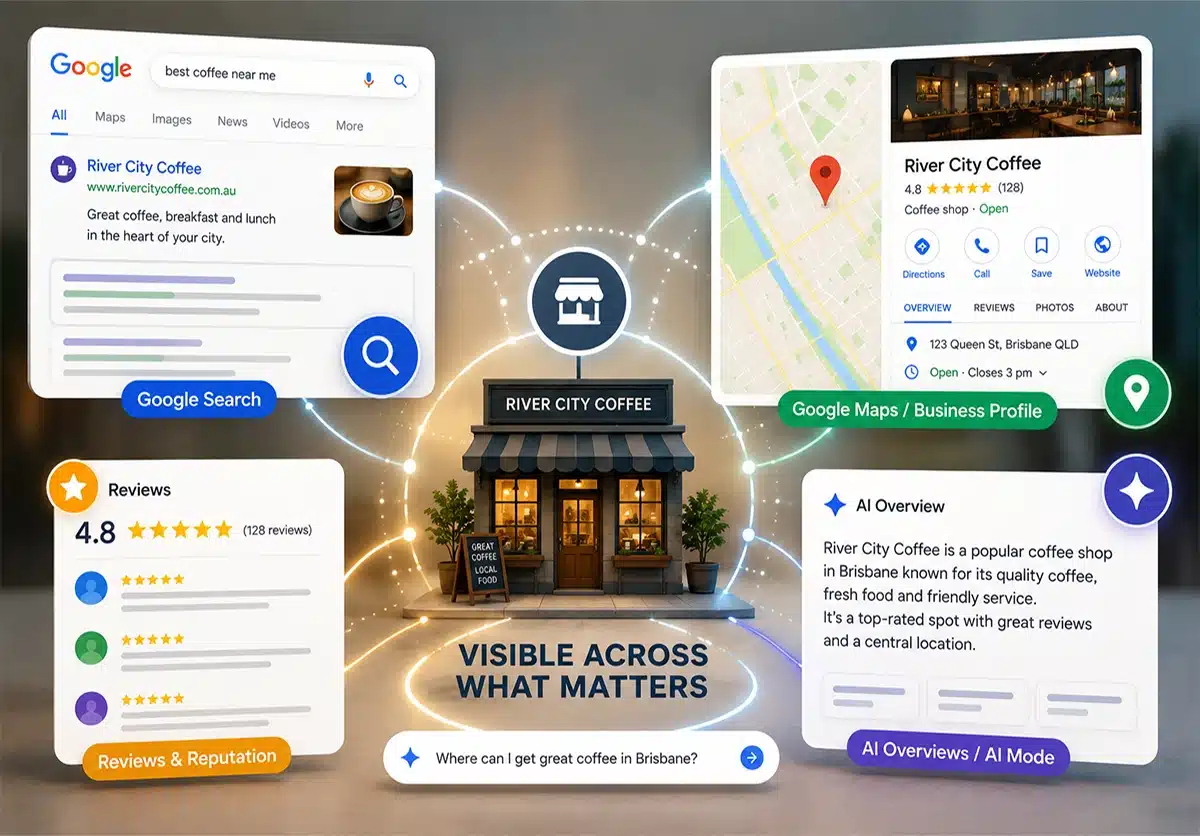
Google says search is becoming more multimodal.
That means people may search with text, images, voice, or a mix of formats. They might take a photo, ask a question, and expect Google to return a useful answer with links to explore.
This is a real change for businesses.
Text still matters, but it should not always stand alone.
High-quality images and videos can help support the content. Product details, Business Profile information, and Merchant Center data also matter where relevant.
For a local business, this may mean keeping business information current. For an ecommerce business, it may mean making sure product information is accurate. For service businesses, it may mean using images, diagrams, or examples that help explain what the service actually involves.
The goal is not to add media for decoration.
The goal is to make the page more useful and easier to understand.
Businesses need to measure value, not just clicks
Google also makes an important point about traffic.
It says clicks from AI Overviews can be higher quality because users may arrive with more context.
That means businesses should be careful about measuring SEO only by raw clicks.
Traffic still matters. But it is not the only signal.
A smaller number of stronger visitors can be more valuable than a larger number of weak visitors. If people arrive better informed, they may spend longer on the site. They may view more pages. They may be more likely to enquire, sign up, buy, or take another meaningful action.
This is where SEO needs to connect to business outcomes.
The question is not only:
“How many people clicked?”
The better question is:
“What did those visitors do once they arrived?”
If the report shows traffic but not enquiries, it is not telling the full story. If rankings improve but leads do not, something is still broken. If users land on the page and leave because the offer is unclear, SEO has not finished the job.
AI search does not make SEO less commercial. It makes commercial measurement more important.
SEO is being held to a higher standard
The strongest takeaway from Google’s article is this:
SEO is not dead.
It is being tested.
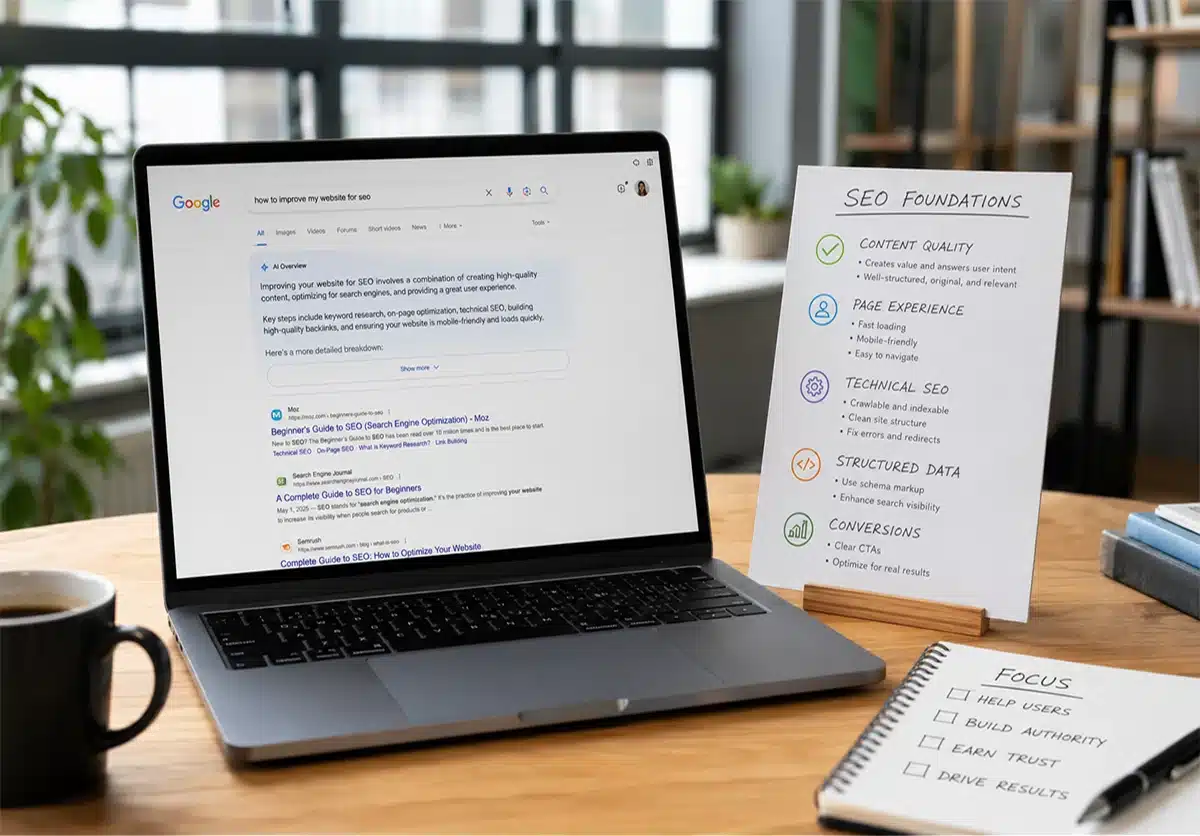
AI search does not remove the need for content, page experience, crawlability, structured data, or useful media. It brings those parts closer together.
A business that has relied on thin content may struggle. A business with a slow, confusing website may struggle. A business with unclear service pages may struggle. A business that only measures rankings and clicks may miss the bigger picture.
But a business with strong SEO foundations is in a better position.
That means useful content. Clean technical setup. Clear structure. Good user experience. Accurate information. Strong measurement.
This is not a new game.
It is the same game with less tolerance for shortcuts.
Ready to strengthen your SEO for AI search?
If your website content is thin, hard to use, or built around old SEO habits, AI search will not fix it. It will expose it.
Scorched Media helps businesses improve the SEO foundations that still matter: useful content, website structure, technical SEO, page experience and conversion paths.
If you want your website to rank better, explain your services more clearly and turn more visitors into enquiries, we can help you find what needs fixing first.
Book your free 15-minute SEO review.
Ready to Get More Website Leads?
If your site isn’t delivering website leads, it’s time to fix it.
We’ll show you what’s wrong and what to do next.
Book your free strategy call with Scorched Media today, and start turning traffic into enquiries.
FAQs About SEO
Is AI search replacing SEO?
No. Google’s guidance shows that AI search still relies on core SEO foundations. Content quality, crawlability, page experience, structured data, and user value still matter.
Should businesses optimise content for LLMs?
Not from this guidance. Google is telling site owners to focus on useful, original content for people. The priority is not chasing LLM tricks. It is making content that Google can access, understand, and trust.
What content performs best in AI search?
Content that answers real user questions clearly has the best foundation. It should be useful, specific, original, and supported by a good page experience.
Does technical SEO still matter?
Yes. Google still needs to crawl, index, and understand your pages. If your content is blocked, broken, or not indexable, it cannot perform properly in Search.
How should businesses measure AI search performance?
Businesses should look beyond clicks. Enquiries, sales, signups, time on site, engaged visitors, and other conversion actions can show whether search traffic is creating real business value.